
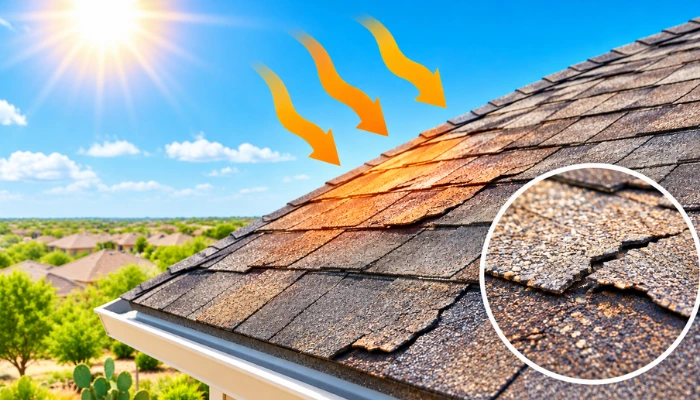
Roofs in South Texas face long periods of intense sunlight, high temperatures, and changing weather conditions. How south Texas heat shortens shingle life depends largely on the roofing materials, installation quality, and ongoing maintenance. Asphalt shingles are designed to handle outdoor exposure, but constant heat can gradually accelerate normal aging. Repeated heating and cooling can cause roofing materials to expand and contract, while strong ultraviolet rays can weaken the protective surface. Over time, these conditions may contribute to cracking, curling, granule loss, and other forms of deterioration.
For homeowners in South Texas, understanding how heat affects shingles can make it easier to recognize problems before they become more expensive repairs. Regular inspections, proper attic ventilation, and timely maintenance can help protect the roof and support a longer service life. Knowing what causes premature shingle wear is the first step toward keeping a roof in better condition through the region’s demanding climate.
How Extreme Heat Affects Asphalt Shingles
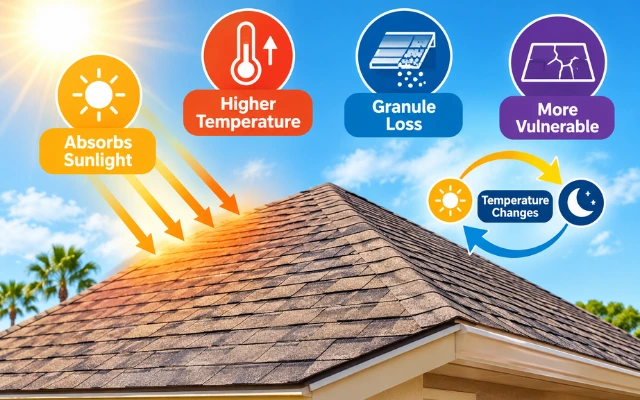
Asphalt shingles absorb sunlight throughout the day, causing their surface temperature to rise significantly above the surrounding air temperature. Prolonged exposure to this heat can gradually affect the asphalt and protective granules. As shingles age, they may become less flexible and more vulnerable to weather-related damage.
Hot conditions can also increase the stress placed on roofing materials when temperatures change between day and night. In South Texas, repeated exposure over many seasons can contribute to faster deterioration than shingles experience in milder climates.
What Happens to Shingles Under Constant Heat
When shingles remain exposed to high temperatures for extended periods, their materials can gradually lose some of their original flexibility and protective strength. Asphalt can become more vulnerable to aging, while the surface may experience increased wear from sunlight and weather exposure.
The protective granules embedded in the shingle surface can also loosen over time, reducing the material’s ability to withstand continued environmental stress. As deterioration progresses, shingles may show visible changes such as fading, cracking, curling, or brittleness. These signs do not always appear suddenly. Instead, heat-related aging often develops gradually, making routine roof inspections important for identifying early changes before they develop into larger roofing problems.
Why Repeated Heating and Cooling Causes Stress
- Daily Expansion: Shingles expand when heated and contract as temperatures fall, creating repeated material stress.
- Material Movement: Continuous movement can gradually weaken connections between individual roofing components.
- Surface Cracking: Repeated temperature changes may contribute to small cracks across aging shingle surfaces.
- Sealant Stress: Heat cycles can affect the adhesive seals that help shingles remain securely attached.
- Nail Area Movement: Temperature changes can place additional stress around roofing fasteners over time.
- Edge Deterioration: Shingle edges may become more vulnerable as repeated expansion affects aging materials.
- Granule Loss: Constant temperature changes can contribute to gradual loosening of protective surface granules.
- Brittleness: Older shingles may lose flexibility and become less capable of handling repeated movement.
- Curling Risk: Continued thermal stress can contribute to lifted or curled shingle edges.
- Moisture Entry: Damaged areas can create opportunities for water to reach underlying roofing layers.
- Faster Aging: Frequent heat cycles can accelerate normal wear when combined with strong sunlight.
- Repair Needs: Persistent thermal stress may increase the need for maintenance or individual shingle replacement.
South Texas Weather Conditions That Speed Up Shingle Aging
Heat is only one part of the environmental stress experienced by roofs in South Texas. Strong sunlight, ultraviolet radiation, humidity, wind, and severe weather can work together to increase roofing wear. During hot periods, shingles repeatedly absorb and release heat as temperatures change throughout the day.
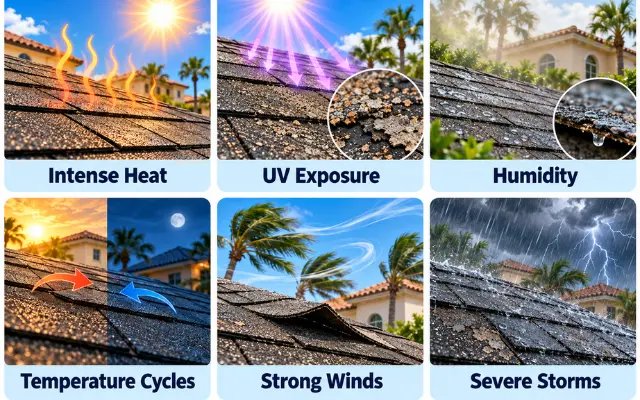
Sun exposure can gradually weaken the outer surface, while storms and strong winds can place additional physical stress on already aged materials. Moisture can also become a concern when damaged shingles no longer provide reliable protection. Understanding these combined conditions helps homeowners recognize How South Texas Heat Shortens Shingle Life, even when there is no single major storm or visible event responsible for the damage.
Roofing Problems Linked to Prolonged Sun and Heat
- Shingle Curling: Prolonged heat can contribute to raised or curled edges as roofing materials age.
- Surface Cracking: Repeated exposure may cause aging shingles to develop visible surface cracks.
- Granule Shedding: Heat and weather exposure can loosen protective granules from shingle surfaces.
- Color Fading: Strong sunlight can gradually fade the appearance of asphalt roofing materials.
- Brittle Materials: Older shingles may become less flexible after years of intense environmental exposure.
- Seal Failure: Heat cycles can affect the adhesive seals designed to keep shingles bonded together.
- Exposed Areas: Damaged shingles may leave portions of the roofing system less protected.
- Wind Vulnerability: Aging shingles may become more susceptible to lifting during strong winds.
- Moisture Problems: Damaged roofing surfaces can allow water to reach vulnerable areas underneath.
- Premature Aging: Constant environmental exposure can shorten the effective service life of shingles.
- Decking Exposure: Serious surface deterioration can eventually expose underlying roofing components.
- Repair Frequency: Accelerated wear may result in more frequent maintenance and repair requirements.
How UV Exposure Weakens Shingle Protection
Ultraviolet radiation from direct sunlight can gradually break down roofing materials as shingles remain exposed year after year. The protective surface of asphalt shingles is designed to withstand outdoor conditions, but continuous UV exposure contributes to normal aging.
Over time, the surface may fade, lose granules, and become more vulnerable to cracking or brittleness. When protective layers deteriorate, the underlying material can become increasingly exposed to heat, moisture, and other weather conditions. In South Texas, where strong sunlight is a regular part of the climate, long-term UV exposure can become an important factor in the overall condition and lifespan of asphalt shingles.
How Heat Can Affect Roof Underlayment and Decking
High roof temperatures can affect more than the visible shingles. The underlayment and roof decking beneath them are also exposed to changing temperatures and environmental conditions. How south Texas heat shortens shingle life is closely related to the overall condition of these underlying roofing components. Repeated heating and cooling can place stress on these layers, particularly when moisture is already present or ventilation is inadequate. Over time, excessive heat and trapped moisture may contribute to material deterioration and increase the risk of roofing problems.
If damaged shingles allow water to enter, the underlying materials may become more vulnerable to deterioration. Problems beneath the shingles can remain hidden until they cause noticeable signs inside the home or become visible during a professional roof inspection. Keeping the entire roofing system in good condition is therefore important, rather than focusing only on the appearance of the shingles.
Heat-Related Shingle Damage at a Glance
| Heat Exposure | Roof Effect | Visible Sign | Potential Result |
| Constant high temperatures | Material aging | Brittle shingles | Reduced durability |
| Strong sunlight | Surface deterioration | Fading | Faster weathering |
| UV exposure | Protective layer breakdown | Granule loss | Greater surface vulnerability |
| Daily temperature changes | Repeated expansion and contraction | Cracking | Increased wear |
| Prolonged heat cycles | Seal stress | Lifted edges | Reduced shingle bonding |
| Excessive roof temperatures | Underlying material stress | Uneven areas | Possible system deterioration |
| Heat plus moisture | Combined material stress | Staining or damage | Greater repair concerns |
| Heat plus strong winds | Increased shingle movement | Loose or lifted shingles | Potential water entry |
How to Extend Shingle Life in a Hot South Texas Climate
South Texas homeowners can take several practical steps to reduce premature roof deterioration and help shingles handle prolonged heat exposure.
- Schedule Regular Roof Inspections: Have the roof checked regularly to identify curling, cracking, granule loss, and other early signs of wear.
- Maintain Proper Attic Ventilation: Good airflow helps release trapped heat from the attic and can reduce excessive temperature buildup beneath the roof.
- Keep Gutters and Roof Areas Clear: Remove leaves, debris, and other materials that can hold moisture against roofing components.
- Address Small Damage Quickly: Replace damaged or loose shingles before minor problems allow water to reach the underlying roofing system.
- Check After Severe Weather: Inspect the roof after strong storms or high winds to identify new damage that could worsen under continued heat exposure.
When Heat Damage Means Your Roof Needs Attention
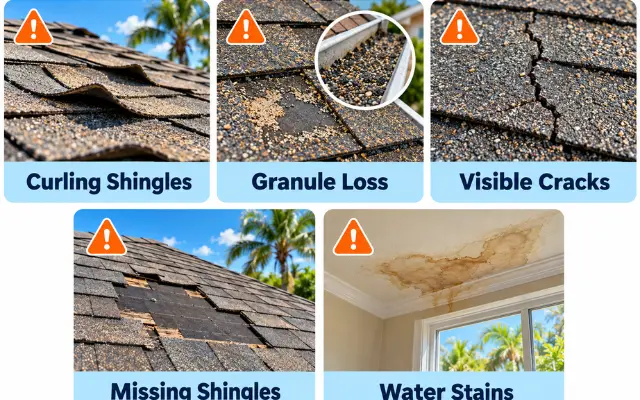
Heat-related deterioration does not always require immediate roof replacement, but certain warning signs should not be ignored. Early attention can help prevent small areas of damage from developing into larger roofing problems.
- Curling or Buckling Shingles: Raised or distorted shingles may indicate advanced weathering or material deterioration.
- Heavy Granule Loss: Excessive granules in gutters or around the property can signal aging shingle surfaces.
- Visible Cracks: Cracked shingles can become more vulnerable to wind, moisture, and continued temperature changes.
- Loose or Missing Shingles: Gaps in the roof surface can expose underlying materials to weather and water.
- Interior Water Stains: Ceiling or wall stains may indicate that damaged roofing is allowing moisture into the home.
Frequently Asked Questions
How does South Texas heat affect asphalt shingles?
South Texas heat can accelerate normal shingle aging through prolonged high temperatures, strong sunlight, and repeated temperature changes. Over time, these conditions may contribute to granule loss, cracking, curling, fading, and reduced flexibility. Regular inspections can help identify heat-related deterioration before it develops into more significant roofing problems.
Does direct sunlight make shingles wear out faster?
Direct sunlight exposes shingles to ultraviolet radiation and sustained surface heating. Over many years, this exposure can contribute to fading, granule loss, brittleness, and other signs of material aging. The effect depends on factors such as shingle quality, roof orientation, ventilation, weather conditions, and overall maintenance. In South Texas, intense sunlight and high temperatures can accelerate these effects, especially during long, hot summers. Regular roof inspections can help homeowners identify early signs of wear and address minor issues before they develop into more costly repairs.
How long can shingles last in South Texas?
Shingle lifespan varies based on the roofing material, installation quality, ventilation, maintenance, weather exposure, and other conditions. South Texas heat can contribute to faster aging, but there is no single lifespan that applies to every roof. Regular inspections can help determine how well an individual roof is performing. Homeowners should also watch for curling shingles, missing granules, cracks, and loose or damaged sections. Addressing these signs early can help prevent leaks and further roof damage. Proper attic ventilation and timely repairs may also help maintain shingle performance over time.
Can roof ventilation help shingles last longer in hot weather?
Proper attic ventilation can help move hot air and moisture out of the attic, supporting healthier roofing conditions. It does not prevent shingles from experiencing outdoor heat or sunlight, but balanced ventilation can help reduce excessive heat buildup beneath the roof and support the overall performance of the roofing system. Adequate ventilation may also help manage moisture that can affect roof decking and other structural components. Homeowners should ensure that attic intake and exhaust vents work together effectively. A roofing professional can assess the ventilation system and recommend improvements when needed.
What are the first signs of heat-damaged shingles?
Early signs can include fading, small cracks, curling edges, granule loss, and shingles that appear brittle or worn. Some problems may be difficult to identify from the ground, especially when deterioration occurs gradually. A professional inspection can provide a closer assessment of the roof’s condition.
Conclusion
South Texas heat can place continuous stress on asphalt shingles through intense sunlight, ultraviolet exposure, and repeated temperature changes. Over time, these conditions can contribute to granule loss, cracking, curling, brittleness, and other forms of premature aging. Heat is also only one part of the overall environment, as wind, moisture, and severe weather can add further stress to an aging roof.
Homeowners can help protect their roofing system by maintaining proper attic ventilation, addressing visible damage promptly, and scheduling regular inspections. Paying attention to early warning signs can make it easier to address developing problems before they become more extensive and costly.